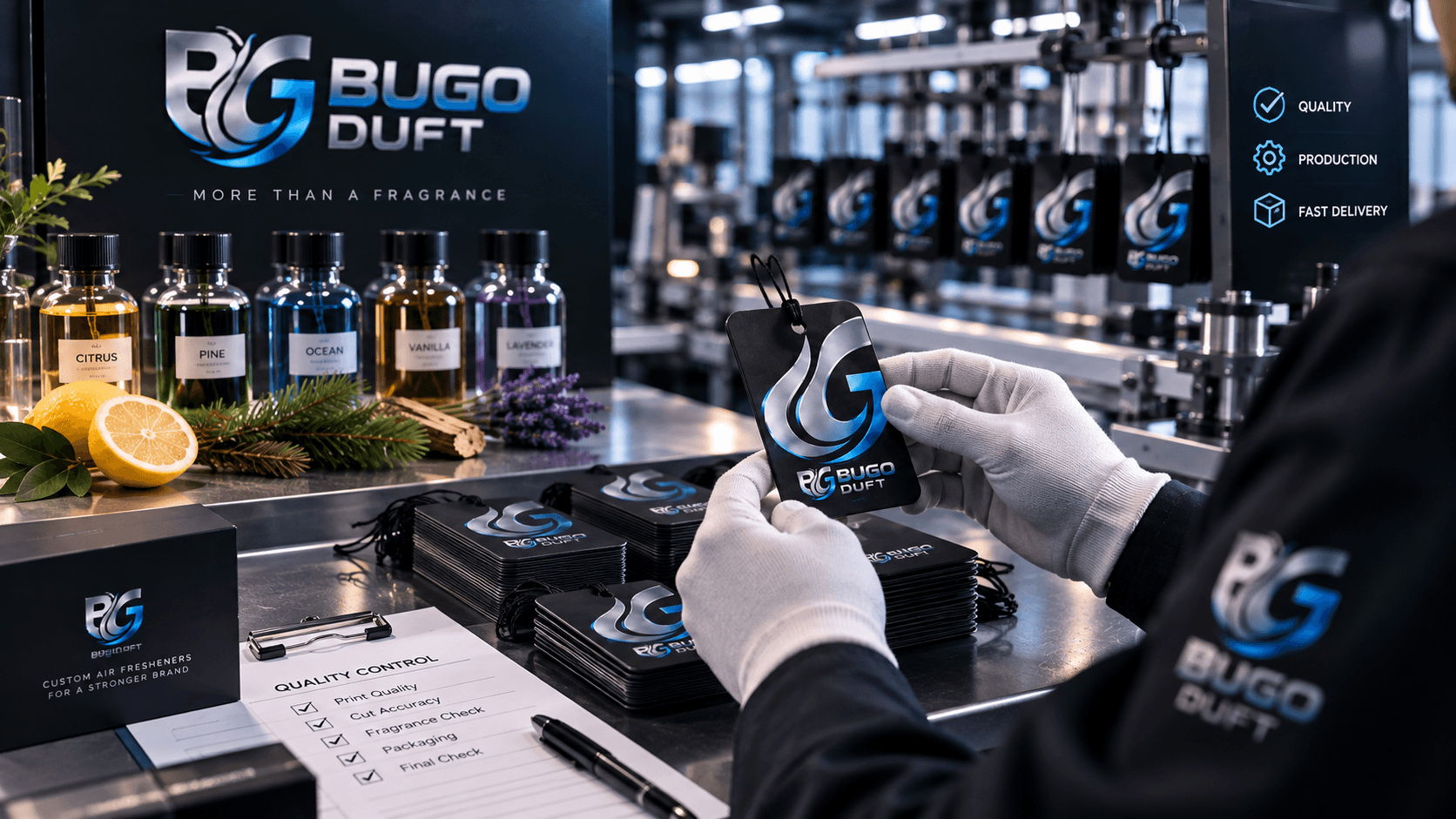
Match brand character, audience and fragrance profile. This guide explains the decisions that matter in practice and how businesses can turn a simple air freshener into a planned brand touchpoint.
Brand attributes
Define three to five words such as fresh, premium or dynamic before choosing scent. Make this a specific approval criterion for “Scent Marketing for Businesses: Matching Fragrance and Brand” so it does not disappear between artwork revisions and operational details.
Audience
Give customer context more weight than an individual decision-maker’s favourite notes. Do not judge this decision for “Scent Marketing for Businesses: Matching Fragrance and Brand” only by instinct; ask whether it supports audience, use case and brand identity at the same time.
Consistency
Use fragrance as a repeatable cue when it is intended to become part of the brand. Define in advance what a good outcome looks like for “Scent Marketing for Businesses: Matching Fragrance and Brand”. That makes variants easier to compare objectively and reduces unnecessary revision loops.
Testing
Compare a small set of favourites in realistic conditions before locking the choice. For “Scent Marketing for Businesses: Matching Fragrance and Brand”, also check how this choice interacts with the rest of the concept. A good isolated idea can still weaken readability, workflow or the main message.
Test environment
Avoid judging scents among many strong surrounding smells and take breaks between samples. Include the real audience for “Scent Marketing for Businesses: Matching Fragrance and Brand” in the decision. What the internal team prefers is not automatically what works best in the later customer interaction.
Intended impression
Decide whether the target feel is fresh, clean, warm, premium or dynamic before testing. Review this point for “Scent Marketing for Businesses: Matching Fragrance and Brand” from the perspective of the actual handover or use moment. Practical clarity there matters more than a solution that only looks good in a presentation.
Broad acceptance
For large audiences, evaluate highly polarising directions particularly carefully. If several options for “Scent Marketing for Businesses: Matching Fragrance and Brand” perform similarly, prefer the clearer and more repeatable one. It will be easier to reorder and use consistently later.
Brand repetition
A consistent core scent can create stronger continuity than constantly changing favourites. Record the final decision for “Scent Marketing for Businesses: Matching Fragrance and Brand” together with the reason behind it. That makes reorders easier and stops settled questions from being reopened without need.
Practical example
The following example shows how the thinking behind “Scent Marketing for Businesses: Matching Fragrance and Brand” can be turned into a specific, controllable process:
A premium, understated brand does not choose based on one person’s favourite scent. It first defines desired impression, audience and use environment, then tests a small set of suitable fragrance families.
Frequently asked questions
How many scents should be tested at once?
For “Scent Marketing for Businesses: Matching Fragrance and Brand”, a short shortlist is usually more informative than many samples in rapid succession. Compare a few candidates, take breaks and score them against defined brand and audience criteria. This reduces fatigue and the influence of one person’s immediate preference.
Should the strongest scent win?
For “Scent Marketing for Businesses: Matching Fragrance and Brand”, strength alone is not a quality measure. The fragrance should fit environment, audience and intended brand effect. A highly dominant direction can be more polarising for a broad customer base than a balanced choice.
How do you separate personal taste from brand fit?
Before testing for “Scent Marketing for Businesses: Matching Fragrance and Brand”, define a few brand attributes such as fresh, clean, premium or dynamic. Review candidates against those attributes together. That keeps one decision-maker’s favourite note from becoming the only basis for a long-term brand choice.
When should the fragrance be finalised?
For “Scent Marketing for Businesses: Matching Fragrance and Brand”, finalise fragrance after audience and use case are clear but before final production approval. If the team is uncertain, a structured comparison of the available range is more reliable than making a rushed last-minute choice.
Next step
Once the decisions for “Scent Marketing for Businesses: Matching Fragrance and Brand” are clear, current product options and prices should not be taken from a static guide. Use the configurator for current information, and the fragrance page for the current range of 40 scents.