Custom Air Fresheners from 250 Pieces · Free Design Service · Free Worldwide ShippingExplore products
Request a quote
Design & Marketing

How to Design the Front and Back of a Custom Car Air Freshener

29 August 2026

Use front and back strategically for branding and QR codes. This guide explains the decisions that matter in practice and how businesses can turn a simple air freshener into a planned brand touchpoint.

Practical guide: the decisions that matter most

For “How to Design the Front and Back of a Custom Car Air Freshener”, it is worth looking systematically at the decisions that will actually be visible in use. The goal is not to fit in as many keywords or design elements as possible, but to connect audience, brand effect, practical use and approval clearly. The following points are structured as a working guide for marketing, purchasing and artwork teams.

Every decision in “How to Design the Front and Back of a Custom Car Air Freshener” should have a concrete role: improve recognition, simplify use, support a customer interaction or prevent a production error. If an element does none of those things, reducing it is often the stronger choice.

Front

Lead with brand and shape instead of trying to show every piece of information. Make this a specific approval criterion for “How to Design the Front and Back of a Custom Car Air Freshener” so it does not disappear between artwork revisions and operational details.

Back

Give contact details, QR code or a short message a clear hierarchy. Do not judge this decision for “How to Design the Front and Back of a Custom Car Air Freshener” only by instinct; ask whether it supports audience, use case and brand identity at the same time.

Reading distance

Check small text at final size, not only zoomed in on screen. Define in advance what a good outcome looks like for “How to Design the Front and Back of a Custom Car Air Freshener”. That makes variants easier to compare objectively and reduces unnecessary revision loops.

Consistency

Both sides should feel like one coherent branded product. For “How to Design the Front and Back of a Custom Car Air Freshener”, also check how this choice interacts with the rest of the concept. A good isolated idea can still weaken readability, workflow or the main message.

Final size

Never judge artwork only while zoomed in; review it at realistic product size. Include the real audience for “How to Design the Front and Back of a Custom Car Air Freshener” in the decision. What the internal team prefers is not automatically what works best in the later customer interaction.

Hierarchy

Prioritise brand first, message second and supporting detail last. Review this point for “How to Design the Front and Back of a Custom Car Air Freshener” from the perspective of the actual handover or use moment. Practical clarity there matters more than a solution that only looks good in a presentation.

Production approval

Check the final proof systematically against logo, text, QR code and front/back requirements. If several options for “How to Design the Front and Back of a Custom Car Air Freshener” perform similarly, prefer the clearer and more repeatable one. It will be easier to reorder and use consistently later.

Reduction

Small promotional formats usually benefit from fewer, clearer elements. Record the final decision for “How to Design the Front and Back of a Custom Car Air Freshener” together with the reason behind it. That makes reorders easier and stops settled questions from being reopened without need.

Recommended workflow from idea to approval

A fixed sequence reduces unnecessary revisions for “How to Design the Front and Back of a Custom Car Air Freshener”. Define use and objective first, then decide artwork and variants, and only then move to final production approval.

  1. Define the objective and exact use for “How to Design the Front and Back of a Custom Car Air Freshener”
  2. Define audience, handover moment and desired response
  3. Collect logo, copy, shape and fragrance requirements
  4. Review artwork at realistic size and in the intended context
  5. Final-check contact details, links and any QR destination
  6. Document the approved version unambiguously
  7. Confirm quantity, timing and current options

Pre-approval checklist

  • Can the purpose of “How to Design the Front and Back of a Custom Car Air Freshener” be explained in one sentence?
  • Is the most important information immediately recognisable at final size?
  • Does every design element have a clear function?
  • Have logo, copy, spelling and links been final-checked?
  • Does the fragrance decision fit audience and brand?
  • Are quantity, buffer, production and shipping timing realistic?
  • Is the exact production-approved version documented?

Common mistakes and how to avoid them

Problems with “How to Design the Front and Back of a Custom Car Air Freshener” often come from several small assumptions that were never reviewed together. Exclude these before approval:

  • Too much information on a limited format
  • Approving only while artwork is heavily zoomed in
  • No clear priority between brand, message and contact
  • Decisions based only on personal preference instead of audience
  • Quantity planned without real distribution or consumption data
  • Deadline planned with no revision or shipping buffer

Practical example

The following example shows how the thinking behind “How to Design the Front and Back of a Custom Car Air Freshener” can be turned into a specific, controllable process:

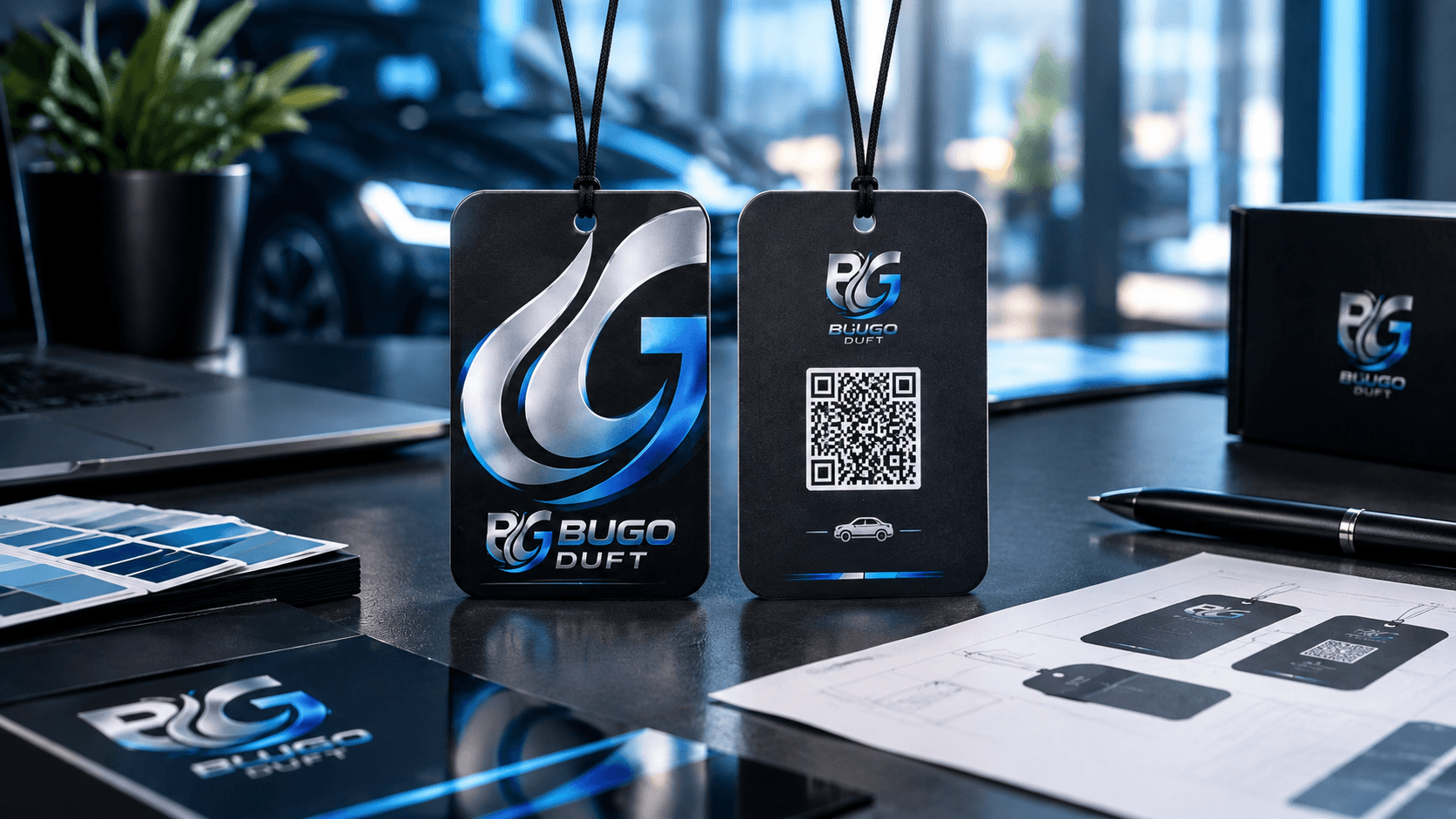
The front carries only the strong brand motif. The back handles the website, short message and QR code, so logo recognition and call to action do not compete for the same space.

What to document internally

For “How to Design the Front and Back of a Custom Car Air Freshener”, keep a short internal approval record. Save not only the artwork but also the intended use: audience, handover moment, chosen shape, fragrance decision, quantity, desired launch date and any QR destination. Those few details make later reorders much easier and reduce the risk of reviving an outdated version or reopening decisions that were already settled.

  • Final file and unambiguous version name
  • Approved copy, links and contact details
  • Chosen shape and fragrance direction
  • Planned quantity, use period and buffer
  • Owner for distribution and reordering

Review the first real-world use

After the first weeks, evaluate “How to Design the Front and Back of a Custom Car Air Freshener” with more than personal impressions. Check how many pieces were actually distributed, whether staff followed the intended process and what questions or reactions customers produced. Where a digital destination is used, QR visits or resulting actions can add another signal. These observations give the next run a practical basis for improving quantity, message, distribution or fragrance choice.

  • Track actual distribution, not only ordered quantity
  • Collect feedback from staff and customer interactions
  • For QR campaigns, review digital response separately
  • Compare remaining stock with real consumption
  • Document lessons for the next order

Reorder as-is or improve first?

Before placing an identical reorder of “How to Design the Front and Back of a Custom Car Air Freshener”, make a short expected-versus-actual review. If the design is recognised, distribution works and the fragrance suits the audience, continuity has real value. If readability causes questions, large stock remains unused or the intended digital action gets little response, identify the cause first. A small targeted change is usually more useful than simultaneously redesigning shape, fragrance, message and distribution process from scratch.

Frequently asked questions

Which file type is best for logos?

For “How to Design the Front and Back of a Custom Car Air Freshener”, vector artwork is usually the most robust basis for logos because contours can scale without losing quality. If only raster artwork exists, check resolution at actual print size. A screenshot is not a dependable print master.

Why does final size matter?

With “How to Design the Front and Back of a Custom Car Air Freshener”, an element can look large and clear on screen yet become too small on the physical product. Check logo, copy, fine lines and QR code at realistic size. That review is often more useful than further zooming in the artwork software.

How should a QR code be integrated?

If “How to Design the Front and Back of a Custom Car Air Freshener” uses a QR code, give it sufficient contrast, clear surrounding space and a focused mobile destination. Test a print at approximately final size on several phones. Do not squeeze the code into an already crowded design at the end.

What belongs in final artwork approval?

Approval for “How to Design the Front and Back of a Custom Car Air Freshener” should unambiguously show the correct front and back, spelling, logo version, shape and every link. Save the approved version with a clear name so an older draft cannot accidentally become the production file.

Next step

Once the decisions for “How to Design the Front and Back of a Custom Car Air Freshener” are clear, current product options and prices should not be taken from a static guide. Use the configurator for current information, and the fragrance page for the current range of 40 scents.
Explore all 40 fragrances

Check current options in the configurator

Configure your custom air freshener

← Back to blog