
A promotional item is good value when it is seen often – not when a single piece is cheap. The figure that captures this is the cost per contact. You can calculate it yourself with a few assumptions. What matters is choosing those assumptions honestly and checking the result later.
The formula
Cost per contact = total cost ÷ expected contacts
Expected contacts come from four values:
- Quantity: how many items you hand out.
- Usage rate: the share that is actually used rather than left in a drawer.
- Contacts per day: how often the user (and others) see the logo each day.
- Days in use: how long the item stays in use.
Total cost includes everything until the item reaches the recipient: the item, the design, delivery to you and – if you distribute by post – envelopes and postage.
A worked example with cautious assumptions
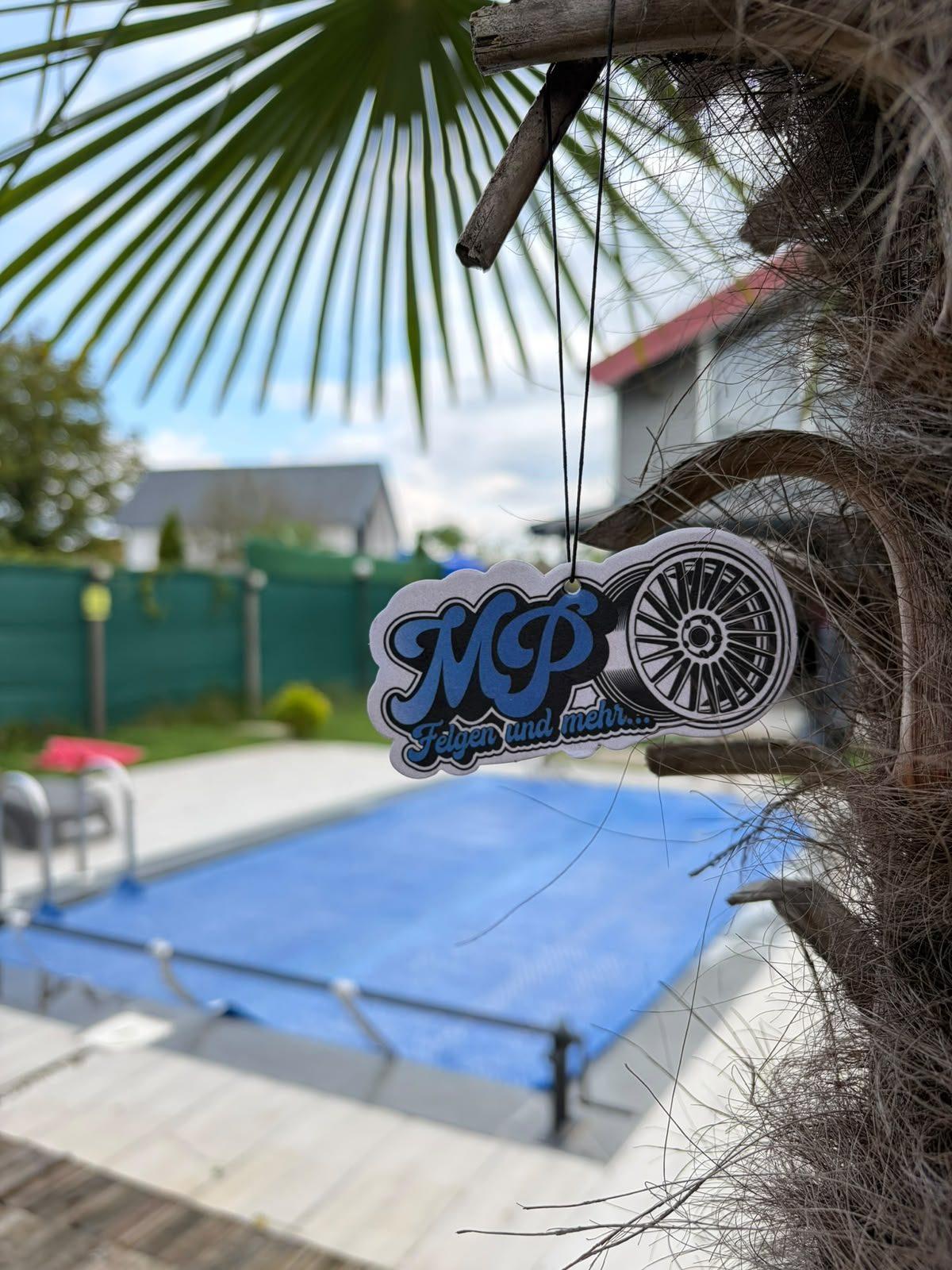
Say a car dealership hands 500 custom air fresheners with its logo to customers:
- Usage rate: 60% actually hang it in the car → 300 pieces in use.
- Contacts per day: 2 – on the way there and back.
- Days in use: 7 – within the range in which the scent is clearly noticeable.
300 × 2 × 7 gives 4,200 contacts. Divide your final price by this number and you have your cost per contact. You will find the final price for your quantity in the price overview – including VAT, shipping and customs.
The example is deliberately cautious: no passengers, no extra weekend trips and only the days with a clearly noticeable scent. If the card stays up longer, the cost per contact drops further – but do not rely on it.
Which values to assume
Days in use
As a guide, the scent of an air freshener is clearly noticeable for about 5–7 days (regular) or 7–9 days (intense). If you want to plan for longer use, choose the intense version – each of the 40 scents is also available as intense.
Usage rate
This depends mainly on whether the item suits the audience. An air freshener works for people who drive; for other audiences, assume a much lower rate or choose a different item.
The hand-over moment
An item handed over in person – at vehicle hand-over, after a service, at a trade show stand – is more likely to be used than one left on a counter. So plan where and when the item is handed over.
How to measure the effect
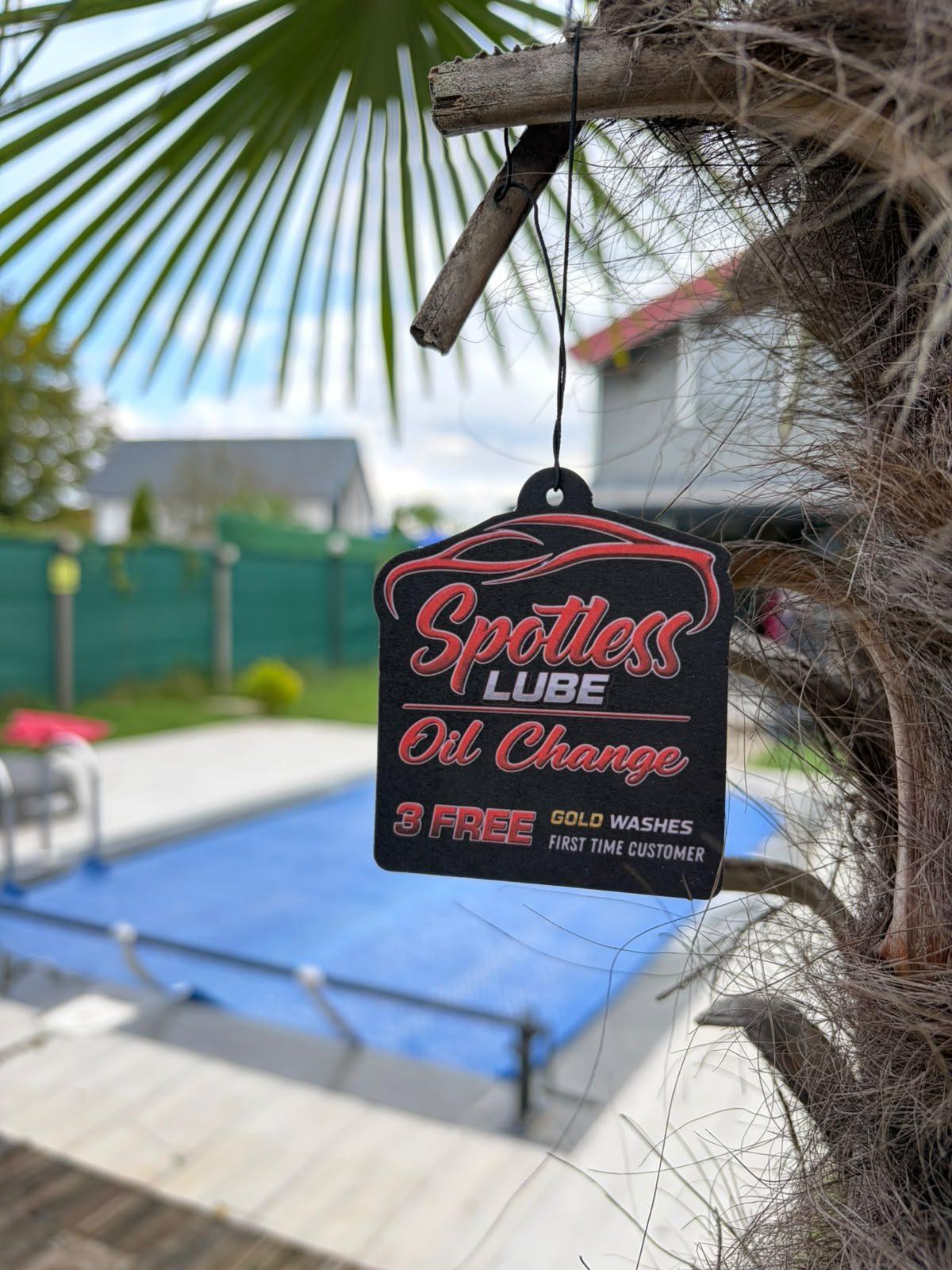
The calculation is an estimate. Only the recipients’ response shows whether it holds. The back of the air freshener gives you room for that – front and back can have different designs.
- QR code: leads to a dedicated landing page; the visits show how many responded.
- Voucher code: a code used only for this campaign, e.g. for the next service.
- Dedicated phone number or extension: calls can be attributed to the campaign.
- Ask in conversation: “How did you hear about us?” – simple but effective.
Splitting the budget
Many companies combine a few high-value gifts for key customers with a light giveaway for everyone else. For wide distribution, what counts most is how often the logo is seen – which is exactly what the calculation above is for.
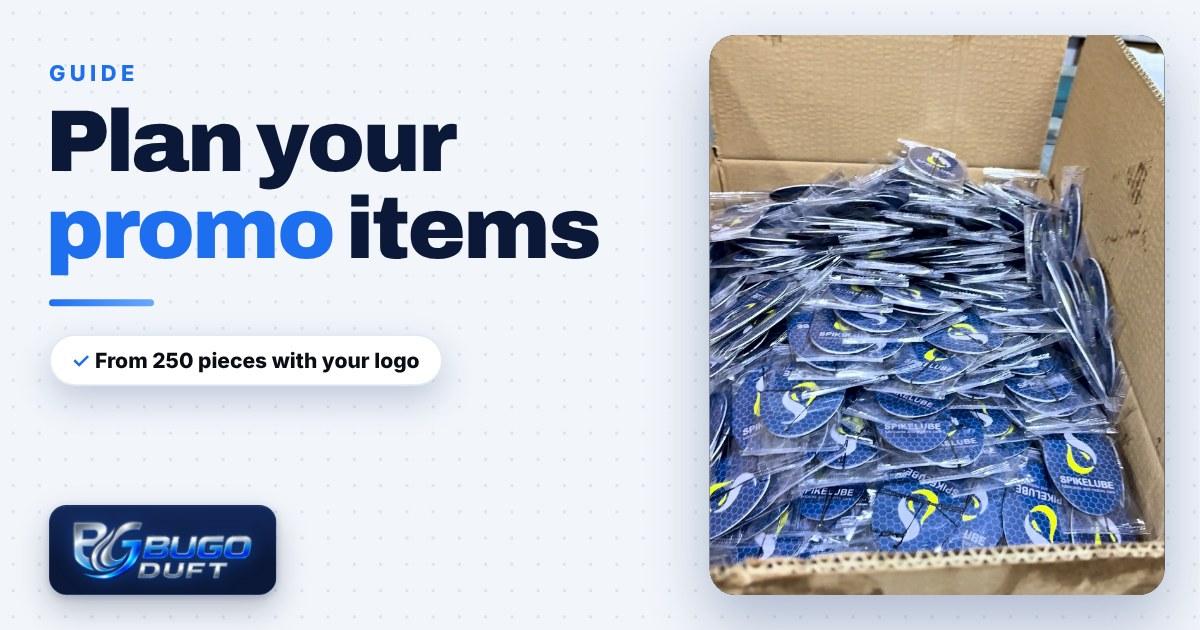
- Test quantity: with 250 pieces – the minimum order – you can test item and message before ordering more.
- Second scent: a second scent is free, so you can see which one your customers prefer.
- Timeline: after your approval, production takes 10–12 working days. Plan seasonal campaigns early.
What you get from BUGO DUFT
- Any shape, printed on both sides, with a QR code on request
- Free design draft, usually in about 6 hours – production only starts after your approval
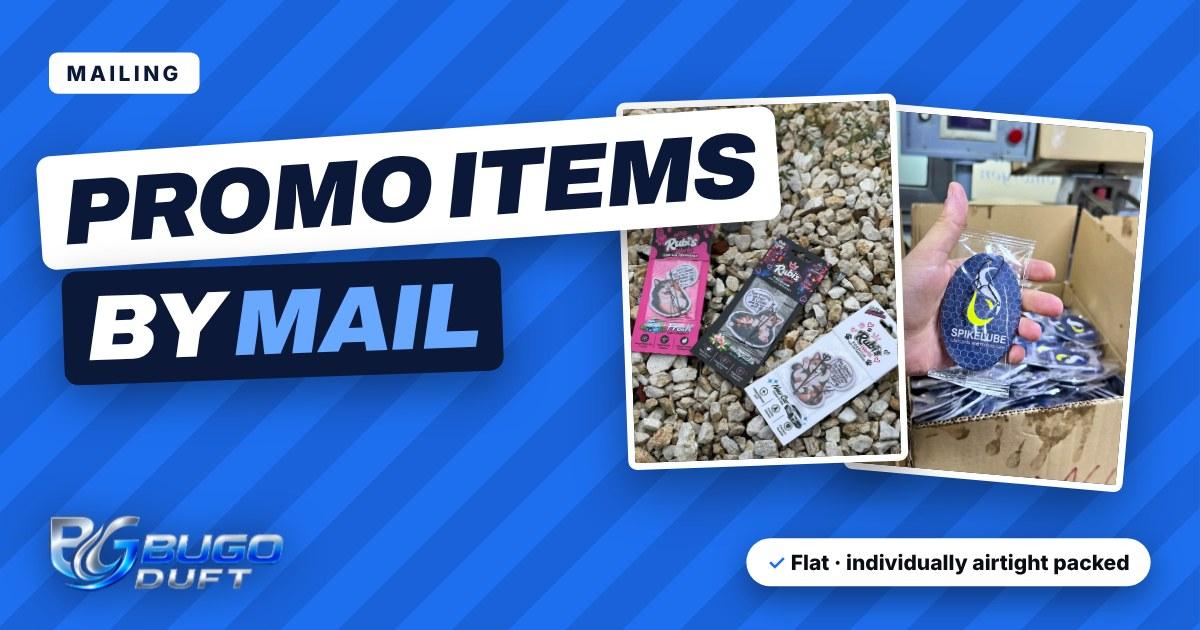
- Individually airtight packed – unopened and away from direct sunlight it keeps for up to 2 years
- Delivery to the EU, Switzerland and the UK, final price including VAT, shipping and customs
Prices for custom air fresheners
Air fresheners vs. pens, mugs and bags
Campaign ideas with measurable results